Saltwater fishing is a completely different beast from freshwater angling. The environment is harsher, the fish are stronger, and the gear takes a beating. If you are heading to the coast for the first time or you are tired of replacing corroded equipment after every trip, you know the struggle. The problem is that building a reliable setup often feels overwhelming because there are thousands of options, and most of them are either too cheap to survive or too expensive to justify. The goal is to assemble a collection of gear that handles the salt, performs under pressure, and doesn’t break the bank. This guide breaks down exactly what you need to build the ultimate saltwater fishing kit, covering rods, reels, lines, terminal tackle, and the accessories that most anglers forget until they are standing in the surf wishing they had them.
What Defines a True Saltwater Kit?
Before you buy anything, you need to understand the difference between gear that is merely labeled “saltwater” and gear that is actually built for it. A true saltwater kit is defined by corrosion resistance, durability, and power. Freshwater gear often has exposed metal parts that will rust within weeks of touching saltwater. Saltwater-specific gear uses sealed drags, stainless steel components, and anodized aluminum bodies to withstand the elements. If you are looking for a comprehensive list of accessories that specifically perform well in harsh coastal environments, checking out this ultimate saltwater fishing kit guide offers a deep dive into regional considerations and gear that holds up over time.
When building your kit, prioritize function over flash. You don’t need the most expensive rod on the rack, but you do need a rod with guides that won’t corrode and a reel with a sealed body. The saltwater environment is unforgiving, and gear failure usually happens at the worst possible moment—usually when you have a trophy fish on the line.
Choosing the Right Rod and Reel Combo
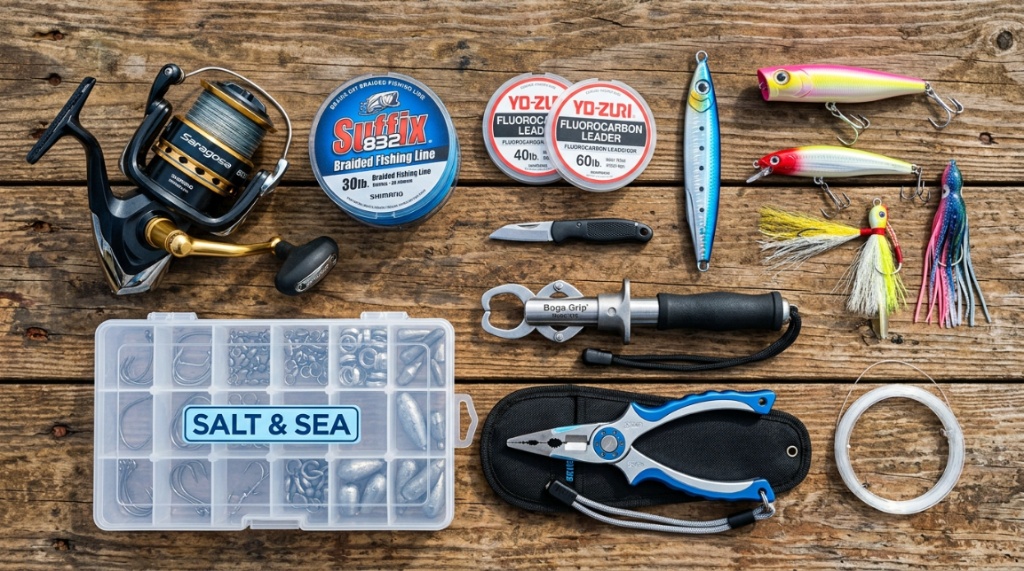
The rod and reel are the heart of your setup. You cannot just pick any combo off the shelf; you need to match the gear to the species you are targeting and the fishing style you plan to use. For most coastal anglers, a medium-heavy spinning combo is the most versatile starting point. This setup handles everything from flounder to redfish and even small tuna.
Spinning vs. Conventional Reels
Spinning reels are generally easier for beginners and work well for casting light lures and bait. They are less prone to backlash and are ideal for surf fishing and pier fishing. Conventional reels, on the other hand, offer more line capacity and drag power, making them better for heavy offshore species like grouper or amberjack. If you are building a single kit, start with a high-quality spinning reel in the 4000 to 6000 size range. This size gives you enough line capacity for most inshore and nearshore situations without being too bulky to cast comfortably all day.
Rod Length and Action
Rod length matters more than most people think. A 7-foot rod is a good all-around choice. It provides enough leverage for casting distance while still being manageable in tight spaces. For surf fishing, you will want a longer rod—around 10 to 12 feet—to cast past the breaking waves. The action of the rod should match your lure weight. A fast-action rod gives you more sensitivity and hook-setting power, while a moderate action rod is more forgiving and helps keep fish hooked during long runs, Before heading out with heavy offshore gear, remember to introduce younger family members to the sport safely by checking out our guide on the Best Fishing Gear for Kids Who Are Learning to Fish.
Line Selection: Braid vs. Monofilament vs. Fluorocarbon
Your line is the only connection between you and the fish, so choosing the right one is critical. In saltwater, braided line is the dominant choice for the main line because of its thin diameter, high strength, and zero stretch. A 20 to 30-pound braid is suitable for most inshore applications. The lack of stretch gives you better hook sets, especially when fishing in deep water or with heavy current.
However, braid is highly visible in clear water. This is where a fluorocarbon leader comes into play. Fluorocarbon is nearly invisible underwater and is highly abrasion-resistant, which is essential when fishing around rocks, pilings, or oyster beds. A 30 to 50-pound fluorocarbon leader is a versatile choice for most saltwater situations. Monofilament still has a place in your kit, primarily for topwater lures where its buoyancy helps keep the lure on the surface, but it should not be your primary line.
Essential Terminal Tackle and Rigs
Terminal tackle is the unsung hero of any saltwater kit. You can have the best rod and reel in the world, but if your hooks are dull or your swivels are weak, you are going home empty-handed. Stock your kit with a variety of sizes and styles to cover different conditions.
Hooks and Weights
Circle hooks are a must for live bait fishing because they tend to hook fish in the corner of the mouth, reducing gut hooking and making release easier. J-hooks are better for dead bait and artificial lures. Carry a range of sizes from 1/0 to 5/0 to cover everything from small baitfish to large cut bait. For weights, bank sinkers and egg sinkers are the most versatile. Egg sinkers are ideal for sliding rigs, while bank sinkers hold bottom better in strong current. A variety pack ranging from 1/2 ounce to 4 ounces will cover most inshore and nearshore conditions.
Rigging Basics
The Carolina rig is arguably the most effective and versatile saltwater rig. It consists of an egg sinker, a bead, a swivel, a leader, and a hook. This rig allows the bait to move naturally with the current while keeping the weight stationary on the bottom. For surf fishing, the fish-finder rig is a better option because it allows the fish to run with the bait without feeling the weight, which reduces the chance of the fish dropping the bait.
Lures That Catch Fish in Saltwater
While bait is often the go-to for beginners, lures are more convenient and can be highly effective when fish are actively feeding. The key is to carry a selection that mimics the local baitfish and works in various water columns.
Topwater Lures
Topwater lures are explosive and exciting. They work best during low-light conditions, such as early morning or late evening, when predatory fish are hunting near the surface. Poppers and walking baits are the two main types. Poppers create a loud splash, while walking baits are worked with a side-to-side action that mimics a wounded baitfish. Carry a few of each in different colors, with white and silver being the most universally effective.
Soft Plastics and Jig Heads
Soft plastic paddletails and jerk shads are arguably the most productive lures for inshore saltwater fishing. They can be rigged on a jig head and retrieved slowly along the bottom or cast and retrieved with a steady, steady retrieve. The action of the tail creates vibration that attracts fish from a distance. Carry a selection of colors, including natural baitfish patterns and bright colors like chartreuse for murky water.
Critical Accessories and Safety Gear
Most anglers focus on the rod, reel, and lures, but the accessories are what make a trip successful and safe. Overlooking these items can turn a great day on the water into a frustrating or even dangerous experience.
Tools and Maintenance
Corrosion is your biggest enemy in saltwater. You need a good pair of corrosion-resistant pliers with a line cutter. These are essential for removing hooks and cutting line. You should also carry a small towel and a bottle of freshwater to rinse your reel and rod after every use. A simple spray of freshwater and a wipe-down can extend the life of your gear by years. Additionally, a hook sharpener is a small item that makes a huge difference. Saltwater fish have tough mouths, and a sharp hook is essential for a solid hookset.
Safety and Comfort
Sun protection is non-negotiable. A wide-brimmed hat, polarized sunglasses, and high-SPF sunscreen are essential. Polarized sunglasses are not just for comfort; they allow you to see fish and structure below the surface, which significantly improves your catch rate. If you are fishing from a boat, a personal flotation device is mandatory. Even if you are fishing from shore, a pair of wading boots with felt or studded soles will prevent slips on slick rocks or algae-covered jetties.
Common Mistakes to Avoid When Building Your Kit
Building a saltwater kit is a process of trial and error, but you can skip the painful lessons by avoiding common pitfalls. One of the biggest mistakes is buying cheap gear to save money. In saltwater, cheap gear fails quickly, and you will end up spending more money replacing it than if you had bought quality gear from the start. Another mistake is overpacking. You do not need ten different rods and a tackle box full of every lure ever made. Focus on versatility and quality over quantity.
Another frequent error is neglecting to rinse gear after use. Saltwater is highly corrosive, and even the best gear will fail if you do not maintain it. Make it a habit to rinse your rod, reel, and lures with fresh water immediately after your trip. Finally, do not ignore the importance of a good leader. Many anglers lose big fish because they use a leader that is too light or too visible. Match your leader to the target species and the water clarity.
Frequently Asked Questions
What is the best all-around rod length for saltwater fishing?
A 7-foot medium-heavy rod is the most versatile choice for general saltwater fishing. It provides enough casting distance for most situations while remaining manageable for precise lure placement. For surf fishing, you will need a longer rod of 10 to 12 feet to cast beyond the breaking waves.
Can I use freshwater gear in saltwater?
You can, but it will not last long. Freshwater gear lacks the corrosion-resistant components needed to survive in a saltwater environment. The metal parts will rust quickly, and the drag systems are often not sealed, allowing saltwater to damage the internal components. It is worth investing in saltwater-specific gear.
How often should I rinse my saltwater fishing gear?
You should rinse your gear with fresh water immediately after every saltwater fishing trip. Pay special attention to the reel, rod guides, and any metal components. A quick rinse and wipe-down will prevent salt buildup and corrosion, significantly extending the life of your equipment.
What pound test line should I use for inshore saltwater fishing?
For most inshore species like redfish, speckled trout, and flounder, a 20 to 30-pound braided main line is ideal. Pair this with a 30 to 50-pound fluorocarbon leader for abrasion resistance and invisibility. This setup provides a good balance of strength and sensitivity.
Do I need a special tackle box for saltwater?
Yes, it is recommended to use a tackle box with rust-resistant trays and a waterproof seal. Standard tackle boxes can allow moisture to accumulate, which accelerates corrosion of hooks and lures. Look for a box with a rubber gasket to keep water out.
Conclusion
Building the ultimate saltwater fishing kit is not about buying the most expensive gear; it is about choosing the right tools for the environment and the species you target. Focus on corrosion-resistant rods and reels, quality braided line with fluorocarbon leaders, and a versatile selection of terminal tackle and lures. Do not overlook the importance of accessories like pliers, sun protection, and a good rinsing routine. By avoiding the common mistakes of buying cheap gear and neglecting maintenance, you will be well-equipped for a successful and enjoyable day on the water. Start with the essentials, learn your local waters, and expand your kit as you gain experience.