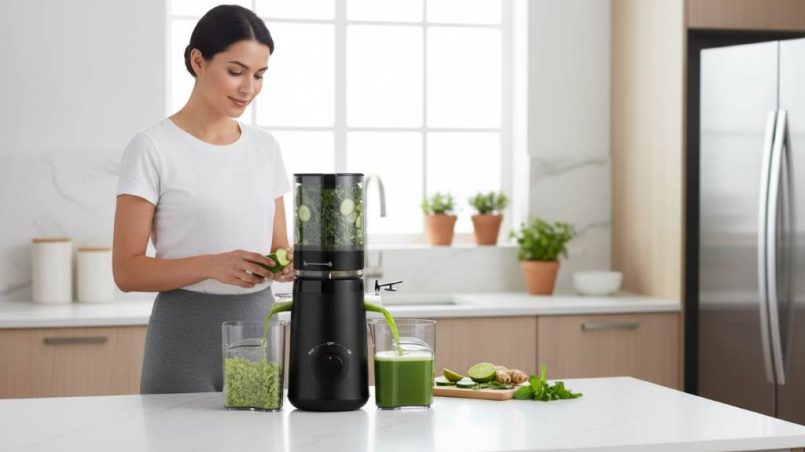
Imagine starting your morning with fresh, vibrant juice while the house still sleeps. No loud grinding wakes everyone up. A quiet slow juicer makes that possible. These machines, also called masticating or cold press juicers, crush produce slowly to extract maximum nutrients with minimal noise.
Studies show the difference clearly. A 2019 NIH research found low-speed masticating juicers produce higher nutritional quality than high-speed models. Another test revealed slow juicers retain up to 89% of nutrients after six hours, compared to just 54% from centrifugal types. Ready to upgrade your routine? Check out quiet juicer options that combine silence with performance.
What Makes a Slow Juicer Different?
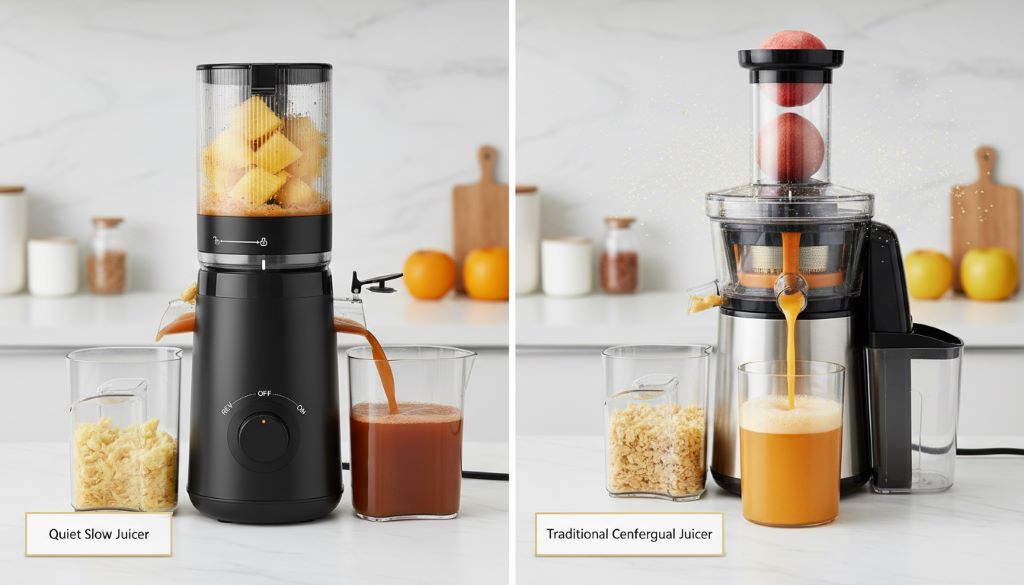
Slow juicers operate at low speeds, usually 40 to 80 RPM. They use an auger to crush and press fruits and vegetables gently. This method creates less heat and oxidation.
In contrast, centrifugal juicers spin blades at thousands of RPM. They work fast but generate heat that can degrade enzymes and vitamins. Therefore, slow juicers preserve more antioxidants and live enzymes.
Moreover, they extract more juice overall. Tests on pineapple showed masticating models yield up to 92% juice, while centrifugal ones reach only 47%. You get richer, smoother juice that lasts longer in the fridge.
Why Quiet Operation Matters in Your Kitchen
Noise affects your daily life more than you think. A loud juicer can hit 80 to 90 decibels, similar to a blender or vacuum cleaner. That level disrupts early mornings or evening routines.
Quiet slow juicers run at 40 to 60 decibels. That matches a normal conversation or light background hum. You can juice without disturbing family, roommates, or neighbors.
Additionally, lower noise reduces stress. Constant loud sounds tire you out over time. A peaceful juicer encourages consistent healthy habits.
Understanding Decibel Levels for Juicers
Decibels measure sound intensity. Every 10 dB increase doubles perceived loudness. For example, 50 dB feels calm, while 70 dB demands raised voices.
Most masticating juicers stay under 60 dB during operation. High-quality models with brushless motors dip even lower, around 40 to 50 dB.
Centrifugal juicers often exceed 80 dB. That makes them unsuitable for quiet homes. Always check manufacturer specs and user reviews for real-world noise reports.
Key Features That Ensure Quiet Performance
Strong design elements create silence. First, look for powerful yet efficient motors. Brushless DC motors run smoother and quieter than traditional ones.
Next, consider low RPM settings. Speeds below 60 RPM minimize vibration and sound naturally.
Solid build quality helps too. Heavy-duty plastic or metal housing absorbs vibrations. Rubber feet stabilize the machine on counters.
Finally, wide chutes reduce pre-cutting noise. Larger pieces feed smoothly without forcing.
Motor Power and Efficiency
Quiet juicers balance power and silence. Motors range from 150 to 300 watts. Higher wattage handles tough produce without straining.
However, efficiency matters more than raw power. Gear reduction systems maintain torque at low speeds. This setup prevents motor whine.
Advanced models include smart sensors. They adjust power automatically for consistent quiet operation across ingredients.
Juice Yield and Nutrient Quality
Higher yield means less waste. Slow juicers excel here because they press thoroughly. You extract more from leafy greens, carrots, and celery.
Nutrient preservation stays key. Less heat keeps vitamins, minerals, and enzymes intact. Research confirms cold press juice retains more vitamin C and polyphenols.
Furthermore, the juice separates better. Minimal foam and pulp create smoother texture that stores well.
Ease of Use and Cleaning
Daily juicing requires convenience. Choose models with simple assembly and wide feeding tubes. Fewer parts speed setup.
Cleaning affects long-term enjoyment. Look for dishwasher-safe components and included brushes. Some brands offer self-cleaning modes.
Quick-rinse features save time. Run water through while running for fast cleanup between batches.
Size, Design, and Counter Space
Kitchen space varies. Vertical masticating juicers save room with tall, narrow profiles. Horizontal models handle greens better but take more width.
Modern designs blend aesthetics with function. Matte finishes and compact footprints look great on counters.
Consider storage too. Lightweight models with cord wraps store easily when not in use.
Versatility Beyond Basic Juicing
Great quiet juicers do more. Many include screens for sorbets, nut butters, and plant milks. Homemade almond milk becomes simple.
Some handle frozen fruits for healthy desserts. Others grind coffee or make baby food.
Extra attachments expand possibilities. You create pasta, grind spices, or homogenize ingredients quietly.
Materials and Build Quality
Safety starts with materials. Choose BPA-free plastics and stainless steel augers. Food-grade components prevent chemical leaching.
Durable construction lasts years. Reinforced gears and strong motors handle daily use without wear.
Look for UL certification and solid customer support. Quality builds justify investment over time.
Related:
Five top kitchen design trends for 2025
How to Compare Models Effectively
Start with specifications. Compare RPM, wattage, and stated decibel levels side by side.
Then read user reviews. Focus on comments about real-world noise during tough ingredients like carrots or ginger.
Watch video demonstrations. Hearing the machine in action reveals true performance.
Finally, check return policies. Test in your home environment for perfect fit.
Common Mistakes Buyers Make
Many prioritize speed over quality. Fast juicers seem convenient but sacrifice nutrients and silence.
Others ignore cleaning difficulty. Complex designs discourage regular use.
Some overlook chute size. Small openings require excessive prep time.
Avoid cheap builds too. Low-cost motors burn out quickly and create more noise over time.
Testing Quietness in Real Life
Run the juicer at different times. Early morning tests show household impact best.
Process various ingredients. Hard roots create most noise, so test carrots and beets.
Stand at normal distances. Sound changes as you move away from the machine.
Compare to everyday sounds. Match against conversation or refrigerator hum for perspective.
Maintenance Tips for Lasting Quiet Performance
Clean immediately after use. Pulp buildup increases vibration and noise.
Lubricate moving parts occasionally. Some models recommend food-safe oil for smooth operation.
Store properly. Avoid extreme temperatures that affect motor efficiency.
Follow manufacturer guidelines. Regular care keeps your juicer whisper-quiet for years.
Health Benefits That Make It Worthwhile
Fresh juice boosts vegetable intake. CDC reports only about 10% of adults meet daily recommendations.
Slow juicing preserves phytonutrients better. Higher antioxidant levels support immunity and wellness.
Consistent habits build over time. Quiet operation removes barriers to daily fresh juice.
Many users report clearer skin, better digestion, and sustained energy from regular consumption.
Building a Morning Routine Around Your Juicer
Start simple. Prepare ingredients the night before for quick sessions.
Experiment with recipes. Green blends, citrus mixes, or root combinations keep things interesting.
Involve family members. Quiet operation lets everyone participate without disturbance.
Track your progress. Note energy levels and mood improvements over weeks.
Conclusion
Choosing a quiet slow juicer transforms your health routine. Focus on low decibels, nutrient preservation, easy cleaning, and versatile features. Prioritize quality build and real user feedback.
You deserve peaceful mornings filled with vibrant, fresh juice. Take time to research models that fit your space and needs. Start enjoying the benefits of silent, nutrient-rich juicing today.
FAQs
What defines a truly quiet slow juicer?
Models operating below 60 decibels qualify as quiet. Premium options with brushless motors reach 40 to 50 dB for library-like peace.
How do slow juicers compare to centrifugal in noise?
Masticating juicers run 20 to 40 decibels quieter. They avoid high-speed blade noise entirely.
Can quiet juicers handle hard vegetables?
Yes. Powerful low-RPM motors crush carrots, beets, and ginger effectively without loud straining.
Is cleaning difficult for masticating juicers?
Modern designs simplify cleanup. Many parts go in the dishwasher, and quick-rinse functions speed the process.
Do quiet slow juicers take longer to juice?
They process slower by design, usually 5 to 10 minutes per batch. Higher yield and better quality make the time worthwhile.
References
- S. National Library of Medicine: Effect of cold-pressed and normal centrifugal juicing on quality – https://pmc.ncbi.nlm.nih.gov/articles/PMC6587058
- Harvard Health Publishing: Are fresh juice drinks as healthy as they seem? – https://www.health.harvard.edu/blog/fresh-juice-drinks-healthy-seem-2016072910044
- Centers for Disease Control and Prevention: Adults Meeting Fruit and Vegetable Intake Recommendations – https://www.cdc.gov/mmwr/volumes/71/wr/mm7101a1.htm
- Vividmoo Research Summary: The Quiet Revolution in Slow Juicing – https://vividmoo.com/blogs/ice-faqs/the-quiet-revolution-how-slow-juicing-is-transforming-our-health