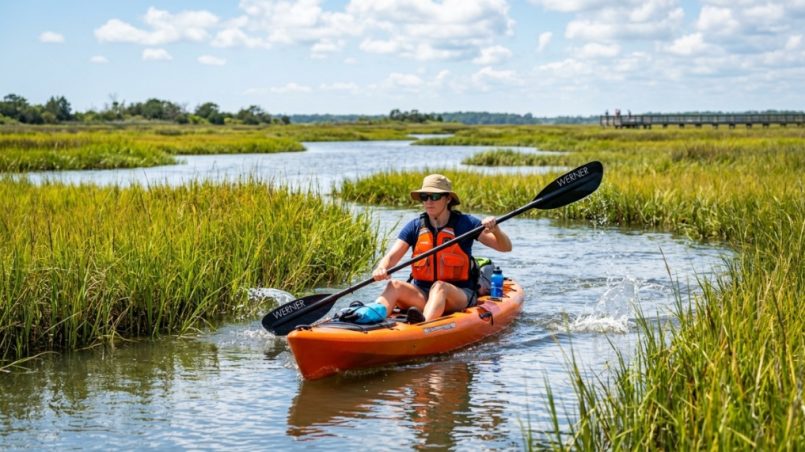
You’ve got your rod, your tackle box is packed, and you’re ready to hit the water. But there’s one question that stops you cold: will the life jacket you grab actually keep you safe? With North Carolina’s mix of coastal surf, inland lakes, and fast-moving rivers, the answer isn’t one-size-fits-all. Picking the right life jacket North Carolina regulations require it isn’t just about checking a legal box; it’s about matching your specific activity to the correct flotation type. You need a vest that works for your body, your sport, and the unpredictable conditions of Tar Heel waters. Let’s cut through the confusion and find your perfect fit.
What Are the Legal Requirements for Life Jackets in North Carolina?
North Carolina law requires that every vessel have a U.S. Coast Guard-approved, wearable life jacket of the proper size for each person on board. Vessels 16 feet and longer must also carry one throwable flotation device. Children under 13 years old must wear a Coast Guard-approved life jacket while the vessel is underway unless they are below deck or in an enclosed cabin. These aren’t suggestions; they are enforceable safety regulations.
Understanding the “Underway” Rule for Minors
The law for children under 13 is strict. “Underway” means the boat is not at anchor, moored, or aground. This applies to motorboats, sailboats, kayaks, canoes, and paddleboards. A child must wear the jacket, not just have it on board. Exceptions only apply if the child is inside a fully enclosed cabin.
Proof of Approval: What to Look For
Every legal life jacket must have a visible U.S. Coast Guard approval label. Look for markings like “USCG Approved” followed by a type number (I, II, III, IV, or V). If the label is missing or illegible from wear and tear, the jacket is not considered legal for compliance in North Carolina. You must replace it.
Throwable Devices on Larger Vessels
If your boat is 16 feet or longer, you must carry a Type IV throwable device in addition to wearable jackets. This is typically a ring buoy or a cushion. It must be immediately accessible, not stowed away in a locker. This device is for rescuing someone who has fallen overboard, not for general wear.
Why Does the Type of Life Jacket Matter for Local Waters?
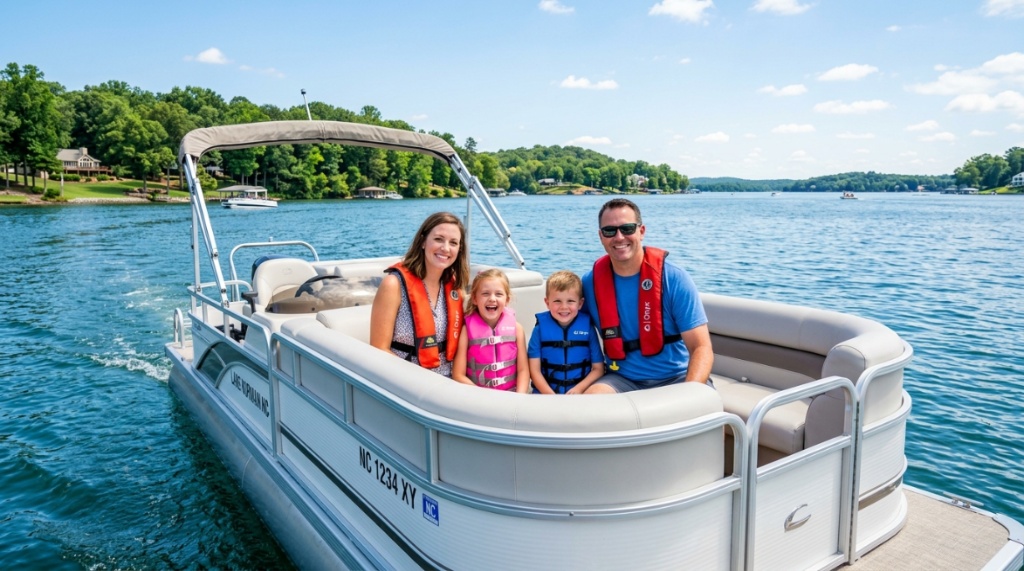
North Carolina offers vastly different water environments, from the swift currents of mountain rivers to the open ocean off the Outer Banks. A jacket designed for a calm lake will not perform well in surf, and a bulky offshore jacket will overheat you on a slow-moving creek. Matching the Type to your water conditions ensures you actually wear it and it functions when needed.
Inland Lakes and Slow Rivers
For reservoirs like Jordan Lake, Lake Norman, or the slow-moving sections of the Neuse River, a Type III flotation device usually offers the best balance of comfort and safety. These are designed for calm, inland waters where quick rescue is likely. They are less bulky and more comfortable for long days of fishing or cruising.
Coastal and Surf Conditions
If you are fishing in the surf at Cape Hatteras, kayaking in the sound, or boating near the inlets, rough water and strong currents demand a jacket with higher buoyancy and a design that keeps your head above water. Type I or Type V hybrid jackets are preferred here because they provide greater flotation and self-righting capabilities in rough, rolling waves.
Swiftwater Rivers
Rivers like the Nantahala or the French Broad require a specific type of jacket built for impact and flotation in moving water. Standard Type III jackets are often insufficient. Look for a Type V whitewater jacket, which offers high buoyancy, a snug fit, and features like rescue harnesses that are vital if you get pinned against rocks.
Type I: Best for Open Ocean
Type I jackets are bulky but extremely effective. They provide at least 22 pounds of buoyancy. They are ideal for offshore fishing and situations where rescue may be delayed. The trade-off is comfort: they can be hot and restrictive, making them poor choices for small lakes or casual paddling.
Type III: Best for Inland Fishing and Paddling
Type III jackets are the most popular choice for recreational boaters in North Carolina. offer at least 15.5 pounds of buoyancy and are designed for continuous wear. do not self-right an unconscious person, but they are comfortable, lightweight, and allow for a full range of motion. They are perfect for bass fishing on the Carolinas’ many lakes.
Type V: Best for Specialized Activities
Type V jackets are activity-specific. You will find them designed for kayaking, waterskiing, or windsurfing. They provide specialized features like high-cut armholes for paddling or low-profile designs for sailing. Crucially, a Type V jacket only counts as a legal device if it is worn and used according to its label instructions. If it is stowed, it does not count toward your boat’s requirement.
| Type | Buoyancy (Pounds) | Best For | Self-Righting? | Comfort Level |
|---|---|---|---|---|
| Type I | 22+ | Open Ocean, rough weather | Yes | Low |
| Type II | 15.5 | Calm inland water, near shore | Yes (slower) | Medium |
| Type III | 15.5 | Inland lakes, fishing, paddling | No | High |
| Type V | Varies | Kayaking, waterskiing, sailing | Depends on design | High (specialized fit) |
Which Life Jacket Features Are Critical for North Carolina Fishing?
Fishing demands a jacket that does not interfere with casting, does not snag on hooks, and provides adequate pockets for small accessories. Look for a design that is low-profile around the shoulders and cut high under the arms. Subdued colors like dark green or camouflage are practical for avoiding reflection and staying comfortable under the hot southern sun.
Pocket Layout and Accessory Storage
Many anglers prefer jackets with multiple zippered pockets for storing pliers, hook removers, and licenses. Ensure pockets seal tightly to prevent losing gear overboard. Avoid jackets with large external Velcro patches, which can snag on fishing line and cause frustration during a strike.
Mesh Backing for Heat Management
North Carolina summers are brutal. A life jacket made entirely of foam can trap heat and cause extreme discomfort. Look for jackets with mesh panels on the back or sides. These panels allow air to circulate, reducing sweat buildup and making it far more likely you will keep the jacket on all day.
High-Cut Armholes for Casting
Standard life jackets can restrict shoulder movement, making it difficult to cast a baitcaster or spinning rod accurately. Specialized fishing life jackets feature high-cut armholes that extend the range of motion. If you are planning a long day of fishing, this feature alone can prevent shoulder fatigue.
How Do I Ensure a Proper Fit for Adults and Children?
A life jacket that is too large can slip off in the water, while one that is too small will restrict breathing and comfort. The jacket must be snug enough that it does not ride up over your chin when you lift your arms. For children, the fit is even more critical because their smaller bodies require a jacket that supports their head and prevents face-down floating.
The Arm Lift Test
After fastening all straps and zippers, raise your arms straight above your head. Ask a friend to gently pull up on the shoulder straps. If the jacket moves up significantly past your chin or ears, it is too loose. Tighten the straps. If the jacket still moves, try a smaller size. A properly fitted jacket should barely move.
Child Sizing and Weight Ranges
Do not buy a child a “grow into it” life jacket. It must match their current weight. Check the label for the specific weight range (e.g., 30-50 pounds). Children weighing under 30 pounds need a Type II infant jacket with a crotch strap, which prevents the jacket from sliding off in the water. Always test the fit in a pool or shallow water before taking a child on a boat.
Adjustable Straps Are Non-Negotiable
Look for jackets with adjustable side straps and shoulder straps. Two adjustable belts provide a better fit than one. Avoid jackets with fixed straps that cannot be tightened. A jacket that fits today might feel loose after you lose winter weight or add a fleece layer under it in cooler months.
Can I Use an Inflatable Life Jacket in North Carolina?
Yes, inflatable life jackets are legal in North Carolina for persons 16 years of age and older. They are not approved for use by children under 16, for personal watercraft (jet skis), or for whitewater paddling. They offer excellent comfort and low profile but require diligent maintenance to ensure the CO2 cylinder and inflation mechanism are functional.
Manual vs. Automatic Inflation
Automatic inflators use a water-soluble pill that triggers inflation upon immersion. These are excellent for fishermen who might fall overboard unexpectedly. Manual inflators require you to pull a cord. They are better for paddlers who want to avoid accidental inflation from rain or splashes. Choose based on your activity and your comfort with spontaneous inflation.
Maintenance and Re-arming Kits
Inflatable jackets require annual inspection. Check the CO2 cylinder to ensure it is not corroded and is tightly screwed in. Inspect the inflation bobbin for damage. After inflation, you must replace the cylinder and bobbin with a re-arming kit, which costs about $25. Neglecting this maintenance renders the jacket useless. For a comprehensive selection of reliable options, check our curated list for the right life jacket North Carolina anglers trust for both comfort and safety.
What Common Mistakes Do Boaters Make When Buying Life Jackets?
The most frequent mistake is buying based on price alone, ignoring fit and intended use. Another common error is assuming an adult jacket fits a teen or small woman. Finally, many boaters fail to stow jackets where they are immediately accessible, burying them under gear in a sealed compartment. When choosing marine gear, durability is everything. Just as manufacturers utilize five ceramic materials used in surface coating to protect heavy-duty boat hardware from saltwater corrosion, life jacket manufacturers rely on marine-grade plastics and treated nylon to withstand the harsh NC coastal elements.
Buying the Wrong Size for Women
Many women find men’s jackets too long in the torso or too tight in the chest. Several brands now offer women-specific cuts that accommodate a shorter torso and provide more room in the bust area. If you are a woman, try on a women’s model before settling for a unisex jacket that shifts uncomfortably.
Storing Jackets Under Deck
A life jacket is useless if you cannot reach it during an emergency. Do not stow jackets in a sealed hatch under the deck. Keep them in a dry, ventilated bin that is easily accessible from the cockpit. For larger boats, mount them on hooks in the cabin so you can grab one quickly without fumbling.
Ignoring Wear and Tear
UV rays, salt water, and age degrade life jacket foam and fabric. Cracks in the foam, frayed straps, or faded fabric indicate the jacket has lost buoyancy. A jacket older than 10 years should generally be replaced, even if it looks okay. If you have any doubt about its integrity, retire it and buy a new one.
Frequently Asked Questions
Do I have to wear a life jacket on a kayak in North Carolina?
North Carolina law requires that a life jacket is on board for each person, but it does not require you to wear it unless the person is under 13 years old. However, for safety reasons, wearing a well-fitted jacket while kayaking is strongly recommended, especially in cold water or swift currents.
Can I use an inflatable life jacket on a jet ski?
No. North Carolina law prohibits the use of inflatable life jackets on personal watercraft (jet skis) because the impact of a collision or fall can cause the CO2 mechanism to fire prematurely or fail. You must wear a standard inherently buoyant Type I, II, or III jacket on a jet ski.
What is the difference between a Type III and Type V life jacket?
Type III jackets are for general recreational use in calm water and do not require any specific action to be legal. Type V jackets are designed for specific activities like kayaking or waterskiing and are only considered legal device replacements when worn according to the label instructions.
How should I store my life jacket to make it last longer?
Store life jackets flat or hanging in a cool, dry place away from direct sunlight. Do not store them in a damp, enclosed space like a boat compartment without ventilation. Never sit on or use a life jacket as a kneeling pad, as this compresses the foam and reduces buoyancy.
Are life jacket requirements the same in the Outer Banks as inland?
The state law is uniform across all waters. However, the U.S. Coast Guard may enforce additional requirements in federal waters off the coast. While the state law is consistent, the type of jacket you should choose for the Outer Banks differs due to rough surf and long distances from rescue.
Does a life jacket expire?
There is no official expiration date printed on life jackets. However, manufacturers generally recommend replacement every 5 to 10 years depending on wear, exposure to sun and chemicals, and how often it is used. Always inspect the fabric, foam, and straps for degradation before each season.
Your Safety Starts With the right choice.
Picking the right life jacket is not a chore; it is the most important piece of gear you will own on the water. North Carolina’s diverse waterways demand that you move beyond a generic, one-size-fits-all approach. Consider where you fish, who is on your boat, and what comfort features will keep you wearing your jacket all day. A proper fit, the correct Type, and thoughtful features like mesh panels and good pockets transform a legal requirement into a reliable tool. Do not settle for a jacket that merely meets the law because the law only sets the minimum. Choose a jacket that fits you, your sport, and your environment. Your life could depend on it.