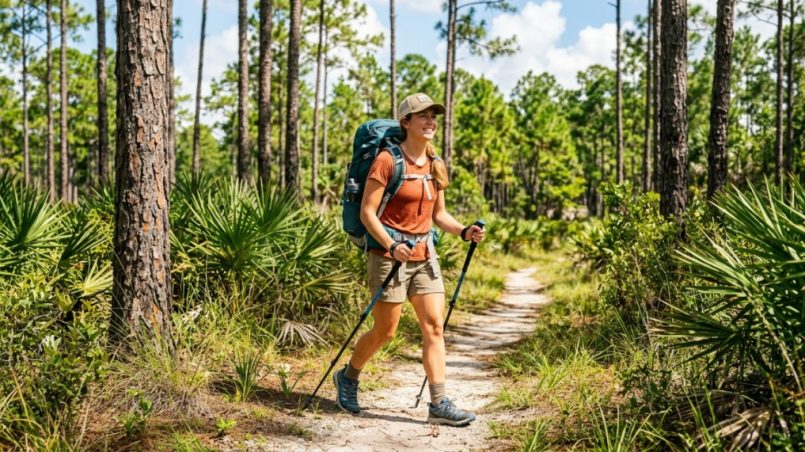
Finding the right backpack in the Sunshine State is a different challenge than shopping for one in Colorado or Montana. The heat, humidity, and sudden afternoon thunderstorms create specific demands that most generic “best-of” lists completely ignore. If you have been lugging around an ill-fitting pack that leaves your shoulders sore and your back soaked with sweat within the first mile, you know exactly why choosing the right gear matters. This guide breaks down the essential features, sizing tricks, and material choices that actually matter for Florida’s unique terrain, helping you find the best camping backpack for women in fl without wasting money on gear that will not survive the swampy conditions.
Key Takeaways
- Florida’s heat and humidity mean breathable suspension systems and moisture-wicking materials are non-negotiable, not just luxury add-ons.
- Proper torso length measurement matters far more than your height; a pack that is too long will cause hip pain and poor weight distribution.
- Look for external hydration compatibility and quick-access pockets for rain gear, as afternoon storms are a daily reality from May through September.
- Lighter total weight is critical in Florida because high humidity reduces your body’s cooling efficiency, making every extra pound feel heavier.
- Waterproofing layers and sealed zippers are essential, but a pack liner or dry bags provide superior protection compared to “water-resistant” fabrics alone.
What Makes Florida Different from Other Camping Destinations?
Florida camping is not mountain hiking. The highest elevation in the state is just over 300 feet, which means you are not climbing steep grades. However, the environment presents its own challenges. The combination of 90-degree heat, 80 percent humidity, and flat, sandy trails changes how your body interacts with a backpack. You will sweat more than you would in drier climates, and that sweat has nowhere to evaporate quickly. A pack that traps heat against your back will make you miserable within thirty minutes.
Additionally, Florida’s terrain includes wet prairies, pine flatwoods, and coastal scrub. These environments frequently involve puddles, mud, and water crossings. A backpack that can handle a sudden downpour or an accidental drop in a shallow creek is essential. The gear you carry is only as protected as the bag carrying it.
Trail Conditions and Gear Protection
Most Florida trails are sandy or composed of crushed limestone. Sand gets into every zipper and strap buckle. Over time, this abrasive material wears down moving parts and can jam zippers. Look for packs with robust, oversized zippers and covered or protected buckles. Additionally, because the sun is intense year-round, UV degradation is a real concern. Quality nylon fabrics with UV-resistant coatings will hold up longer than cheaper alternatives that become brittle after a few seasons of intense exposure.
How Should a Women’s Backpack Fit Properly?
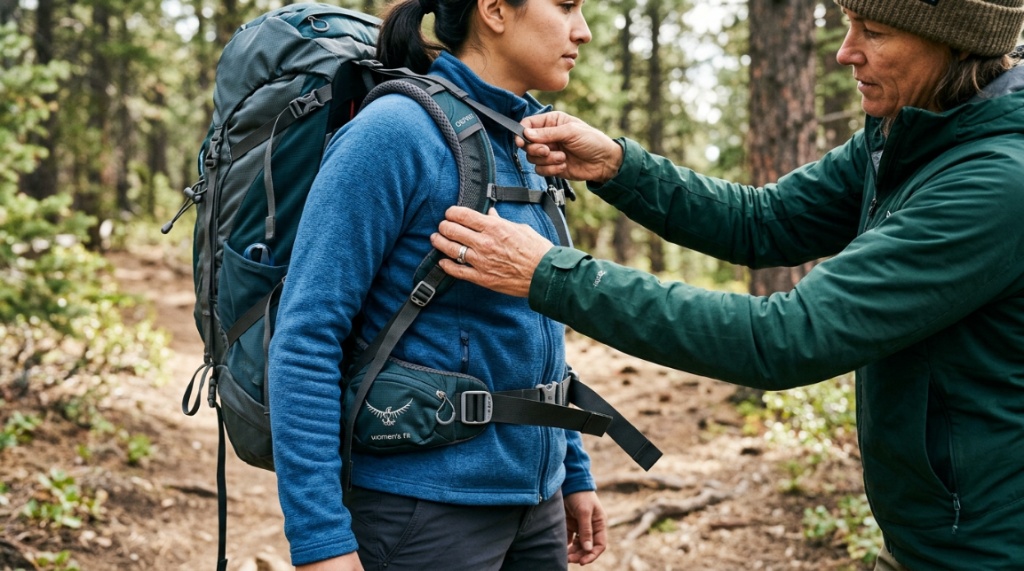
Fit is the single most important factor when selecting any backpack, and women’s-specific models are designed with different torso proportions, shoulder widths, and hip shapes in mind. A pack that fits correctly should transfer roughly 80 percent of the total weight to your hips. If you feel pressure on your shoulders or your lower back aches after thirty minutes of walking, the fit is wrong.
Measuring Your Torso Length
Before looking at any brand or model, measure your torso length. This is the distance from the bony bump at the base of your neck (C7 vertebra) down to the top of your hip bones (iliac crest). This measurement, not your height, determines frame size. Women with longer torsos often need a medium frame even if they are short in stature, while tall women with short torsos may require a small frame.
To measure correctly, tilt your head forward and find the prominent bone at the base of your neck. Place your hands on your hips so your thumbs point backward; the top of your thumbs should align with your iliac crest. Have someone measure between these two points. Most women fall in the 15-to-19-inch range, but custom adjustments matter more than conforming to a standard size chart.
The Hip Belt Is Everything
Women generally have wider hip bones with different angles than men. A women’s-specific hip belt is contoured to wrap around this shape without pinching or sliding down. The belt should sit comfortably over your hip bones, not your waist. When the belt is properly tightened, you should be able to slide your hand between the belt and your body while feeling firm pressure. The shoulder straps should wrap around your shoulders without gaping, and the sternum strap should sit at approximately armpit level.
Which Materials Perform Best in Florida’s Climate?
The fabric and construction of your backpack determine its longevity and performance in humid, wet conditions. Standard pack materials are not all created equal, and choosing the wrong one can mean replacing your gear much sooner than expected.
Understanding Denier Ratings
Denier (D) measures fabric thickness. Lower numbers, like 70D or 100D, are lighter and more flexible but less resistant to abrasion. Higher numbers, like 210D or 420D, are heavier but far more durable. For Florida’s sandy, rough trails, a balance is best. A pack made entirely of ultra-light 70D fabric may tear when brushed against sharp palm fronds or limestone rocks. Look for packs that use a heavier fabric on the base and areas that contact the ground most frequently, while using lighter fabric on the top and sides to save weight.
Water Resistance vs. Waterproofing
Most backpacks are water-resistant, meaning they can handle light drizzle or splashes, but they are not fully waterproof. Seams, zippers, and openings allow water to penetrate during heavy rain. In Florida, summer storms arrive quickly and dump significant rainfall in short bursts. A rain cover helps, but covers only protect the exterior. Internal protection is achieved through dry bags or pack liners. A waterproof pack liner (essentially a large, sealed sack) is the most reliable method for keeping your gear dry, regardless of how heavy the rain gets.
Breathable Back Panels
Traditional packs have foam padding that presses directly against your back, trapping heat and moisture. In Florida, this becomes unbearable. Look for packs with suspended mesh back panels or channels that allow air to flow between the pack and your torso. These trampoline-style suspension systems create a gap that lets heat escape and sweat evaporate. While these designs add slight weight, the comfort improvement in a subtropical climate justifies the extra ounces.
What Size Backpack Do You Need for Florida Trips?
Backpack capacity is measured in liters, and the right size depends entirely on the type of trips you plan to take. Guessing too large leads to carrying unnecessary gear, while guessing too small leaves you unprepared.
| Trip Type | Capacity Range | Best For |
|---|---|---|
| Day Hike | 15–25 liters | Trail snacks, 2–3 liters of water, rain jacket, small first-aid kit |
| Overnight | 30–40 liters | Sleeping bag, tent (shared), additional clothing, overnight food |
| 2–3 Days | 40–50 liters | Full camping gear, solo tent, more food, cooking equipment |
| 4+ Days | 50–65 liters | Extended trips, bulkier gear, additional supplies |
Why Smaller Is Often Better in Florida
Because Florida trails are flat, you may be tempted to bring more gear. Resist this urge. Lighter packs are safer in the heat. Your body works harder to cool itself when the heat index exceeds 95 degrees, and carrying excess weight raises your core temperature. Start with the smallest pack that can accommodate your essentials. If you find yourself constantly leaving gear at home, you have the right size.
Which Features Should You Prioritize for Florida Conditions?
Beyond basic fit and materials, specific features make life easier on Florida trails. These are not marketing gimmicks; they address genuine environmental challenges.
Hydration System Compatibility
In Florida’s heat, you will drink much more water than you would in cooler climates. A hydration reservoir (bladder) allows you to sip continuously without stopping to dig a bottle out of your pack. Ensure any pack you consider has a dedicated hydration sleeve and a routing port for the hose. Check that the hose can be routed over your shoulder and clipped to the sternum strap for easy access while walking.
External Pocket Placement
Rain gear is not optional in Florida, but it is also not something you want to dig for when the sky opens up. A pack with a large external stretch pocket or a top lid that can be accessed without opening the main compartment makes it easy to grab a jacket quickly. Similarly, a small hip-belt pocket is perfect for storing your phone, lip balm with SPF, or a compass without stopping.
Compression Straps and Gear Loops
Compression straps stabilize the load and prevent the pack from shifting when you move. They also allow you to attach items externally, like a foam sleeping pad or a wet tent fly. In Florida, where you may encounter water crossings, having the ability to strap gear to the outside keeps certain items from getting soaked inside the main compartment.
How to Avoid Common Backpacking Mistakes in Florida
Even experienced campers make errors when adapting to Florida’s environment. Recognizing these mistakes ahead of time saves you discomfort and potential gear failure.
- Ignoring the heat index: A 15-minute hike in the shade feels different from a 15-minute hike under direct sun with no breeze. Always carry more water than you think you need.
- Choosing dark-colored packs: Dark fabrics absorb solar radiation and heat up significantly. Light-colored packs reflect sunlight and stay cooler against your body.
- Forgetting about insects: Florida’s mosquitoes and biting flies are relentless. A pack with a hip belt pocket provides quick access to repellent, preventing you from dangling your pack while searching through the main compartment.
- Overpacking for temperature swings: Florida nights rarely drop below freezing except in the northern panhandle during winter. A bulky 0-degree sleeping bag wastes space and adds excessive weight. Choose gear appropriate for 40-to-60-degree summer nights.
What Is the Ideal Total Pack Weight for Women in Florida?
General backpacking guidance suggests carrying no more than 20 percent of your body weight for a fully loaded pack. In Florida’s humid heat, this number should be lower. The high humidity impedes evaporative cooling, meaning your cardiovascular system works harder during exertion. A more practical target for Florida conditions is 15 percent of your body weight, and lean toward 10 percent for longer treks in peak summer months.
If you weigh 150 pounds, a fully loaded pack should ideally weigh between 15 and 22 pounds. If your pack alone weighs 5 pounds before you add anything, you have already used more than 30 percent of your weight budget before packing a single item of clothing.
Frequently Asked Questions
Can I use a men’s backpack instead of a women’s version?
You can, but it is rarely the best choice. Men’s packs typically have longer torso lengths, wider shoulder straps, and less contoured hip belts. For most women, this results in poor weight distribution and discomfort. If you are between sizes, try multiple models and pay attention to hip-belt fit.
What is the best way to keep gear dry in Florida rain?
Use an internal pack liner or individual dry bags in addition to a rain cover. A pack liner (a large waterproof sack that fits inside your backpack) is the most reliable solution. Water can still infiltrate through zippers and seams during prolonged downpours, and the liner protects your gear regardless, For insights on integration standards and language requirements in new regions, read more about how migrants will have to pass tougher language tests.
How many liters do I need for a weekend camping trip?
For a two-night Florida camping trip, a 40- to 50-liter pack is sufficient for most women. This capacity accommodates a tent (if shared, divide the weight), a sleeping bag, a small stove, three days of food, and personal items. If you are renting cabins or using a car campground, a smaller 30-liter pack works fine.
Are lightweight backpacks durable enough for Florida trails?
Ultra-light packs with thin fabrics (below 70D) are at risk of tearing on sharp vegetation or rough limestone. Choose a pack that balances light weight with reinforced construction on high-wear areas. A base layer of 210D to 420D fabric provides a good compromise between durability and weight.
Should I buy a pack with a built-in rain cover?
A built-in rain cover is convenient, but it adds weight and takes up space. An alternative is a purchased aftermarket cover that fits over any pack. More importantly, a rain cover does not protect against submersion in water crossings, so always pair it with a pack liner for complete protection.
Conclusion
Selecting the right backpack for Florida camping comes down to understanding the environment rather than simply following generic gear advice. Prioritize a proper torso fit with a contoured hip belt, choose breathable framing that keeps airflow against your back, and select materials that handle humidity and UV exposure. Keep your total load light because heat and humidity demand more from your body. A pack with hydration compatibility, quick-access rain gear storage, and durable fabric will serve you well on every trail from the Everglades to the Panhandle. Take the time to measure your torso, consider the trip types you actually take, and invest in a pack that fits both your body and the Florida landscape.
