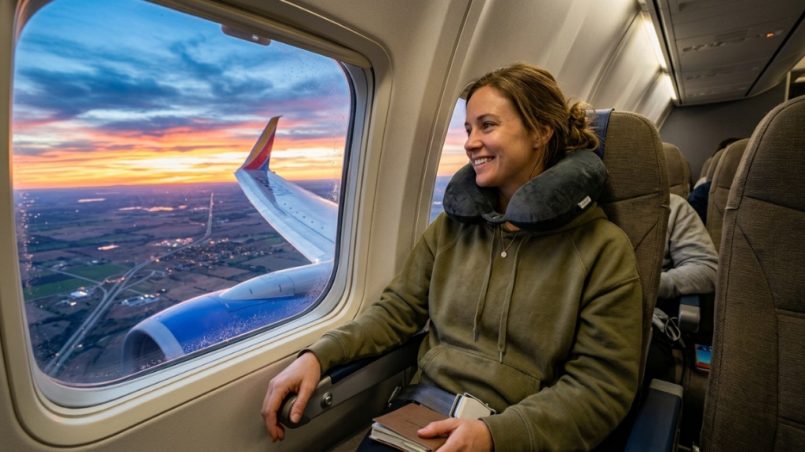
Flying through Texas often means long hauls. A flight from Dallas to El Paso takes over an hour and a half, while a trip from Houston to Amarillo can push two hours in the air. Add in the time spent taxiing on the tarmac at DFW or Bush Intercontinental, and you are looking at a significant chunk of time in a cramped seat. Without proper support, that time leads to a stiff neck and a sore back before you even land. The challenge is that the market is flooded with options, and most of them simply do not work. Finding the best travel neck pillow texas flights requires understanding your sleeping style, the seat you will be in, and the materials that actually provide support. This guide breaks down exactly what to look for so you can arrive at your destination ready to go, rather than needing a chiropractor.
Why Most Neck Pillows Fail on Long Flights
The primary reason most travel pillows fail is that they push your head forward. Traditional U-shaped pillows wrap around the back of your neck and rely on the chin to stop your head from falling forward. This creates a “nodding” position that strains the cervical spine. When you fall asleep, your chin drops, and the pillow puts pressure on the front of your throat, which restricts airflow and causes you to wake up with a jolt.
Another common issue is sizing. A pillow that fits a petite person perfectly will be useless for someone with a broader neck and shoulders. If the pillow is too loose, your head flops to the side. If it is too tight, it pushes your head forward. Most generic pillows are one-size-fits-all, which actually means they fit almost no one perfectly.
The “One-Size-Fits-All” Trap
When shopping for a pillow, pay close attention to the dimensions. Look for the distance between the two “lobes” of the U-shape. This gap needs to match the width of your neck. If the gap is too narrow, the pillow will sit behind your ears and push your head forward. If it is too wide, it will slide off your shoulders. Measure your neck and shoulder width before purchasing to ensure a snug fit.
Understanding Your Sleep Position on a Plane
Your sleeping style dictates the shape of the pillow you need. There is no universal solution. You need to be honest about how you actually sleep on a plane, not how you hope you will sleep.
Side Sleepers
If you lean your head against the window or the side of the seat, you need a pillow that is taller on the sides. A standard U-shape is often too thin to fill the gap between your ear and your shoulder. Look for a pillow with a high side wall that prevents your neck from bending laterally. A “J-shaped” or “hook-style” pillow is often better for side sleepers because it provides a flat surface against the seat and a tall wall for your head to rest against.
Back Sleepers
If you sleep sitting upright, you need support that keeps your head in a neutral position. You want a pillow that is thinner in the back and supports the base of your skull, not the middle of your neck. A cervical contour pillow designed for travel is ideal. These have a dip in the center that cradles the back of your head, preventing the forward-head posture that causes pain. Planning a relaxing trip? Make sure your hotel stay is just as comfortable by making sure you Cooling Mattress Topper for Hot Sleepers before your next getaway.
Forward Sleepers
If you tend to fall forward, you need a pillow that blocks your chin from dropping. A traditional U-shape can work, but only if it is firm enough to act as a brace. Look for a pillow with a high front section that your chin can rest on. Alternatively, consider a pillow that attaches to the tray table, which allows you to rest your forehead on a padded surface. This keeps your spine aligned but requires a seat with a stable tray table.
Key Materials: Memory Foam vs. Inflatable vs. Microbead
The material determines the level of support and the packability. Each option has trade-offs that matter depending on your flight itinerary.
Memory Foam
Memory foam offers the best support and comfort. It conforms to your neck and distributes pressure evenly. The downside is bulk. A quality memory foam pillow takes up significant space in your carry-on. If you are flying on a budget airline like Frontier or Spirit, where personal items are strictly limited to 18 x 14 x 8 inches, a bulky pillow can eat up valuable space. Look for a pillow that comes with a compression sack. You can squeeze the air out and roll it up to save space, though it will expand once you open the bag.
Inflatable
Inflatable pillows are the most packable option. They deflate to the size of a water bottle. However, they often feel unstable and can be noisy. The air pressure shifts as you move, and the pillow can bounce when the plane hits turbulence. If you choose an inflatable, look for one with a textured surface or a baffle system that limits air movement. Also, consider a hybrid design that has a small amount of foam on the surface and an air chamber underneath. This provides the support of foam with the packability of air.
Microbead
Microbead pillows are cheap and lightweight, but they offer almost no support. The beads shift away from your neck, leaving you with a thin layer of fabric. They are fine for short hops, but for a flight from Austin to New York, they will not prevent neck pain. Avoid these unless you are on a tight budget and a short flight.
How to Choose the Right Pillow for Your Texas Flight
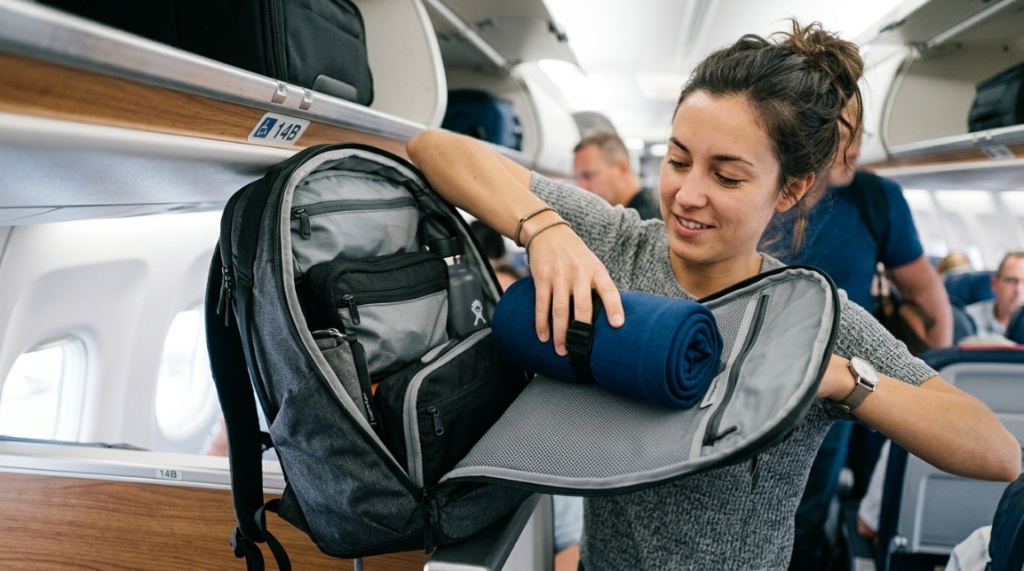
Texas airports are hubs for long-distance travel. Whether you are flying out of Dallas Love Field or San Antonio International, you need a pillow that works for the specific seat configuration you will encounter. Here are the critical factors to evaluate before you buy.
Check the Seat Width and Armrests
Many modern aircraft seats have narrow widths, especially in economy. A bulky pillow can push your head forward because the seat back is curved. Before you buy, consider the type of aircraft you are flying on. If you are on a regional jet (like a CRJ-900) with narrow seats, a slim-profile pillow is better. If you are on a wide-body aircraft with more room, you can handle a thicker pillow.
Consider the “Hoodie” or “Scarf” Style
For Texas flights, where the cabin temperature can fluctuate wildly, a hoodie-style pillow is a smart choice. These are essentially a scarf with a built-in pillow. They provide neck support while also keeping you warm. They are also less bulky than traditional U-shaped pillows because they wrap around your neck rather than sticking out to the sides. This makes them easier to use when you are sitting in a middle seat.
The Importance of a Washable Cover
Airplanes are not clean. The fabric on the seat, the tray table, and the window shade harbor germs. Your pillow will be pressed against your face and neck for hours. A removable, machine-washable cover is non-negotiable. Some pillows have antimicrobial treatments, but washing the cover is the only way to truly keep it clean. Check the zipper quality on the cover; cheap zippers break after a few washes.
Practical Tips for Using Your Pillow Effectively
Even the best pillow will not work if you use it incorrectly. Here are the common mistakes travelers make and how to fix them.
Position It Correctly
Do not place the pillow behind your head. Place it behind your neck, with the opening facing forward. The thicker part of the pillow should sit in the curve of your neck, not under your skull. This supports the natural lordotic curve of your cervical spine. If the pillow has a higher side, rotate it so the high side is on the side you lean toward.
Use the Tray Table for Support
If you are a forward sleeper, do not fight the seat belt. Instead, place a small pillow or a folded jacket on the tray table and rest your forehead on it. This keeps your spine straight. Some travel pillows are specifically designed to clip onto the tray table. These are excellent for long flights because they prevent the “head bob” that wakes you up every few minutes.
Pair It with a Seatbelt Pillow
For overnight flights, consider using a pillow that attaches to the seatbelt. This prevents you from sliding forward and keeps your hips stable. It is a niche product, but it works well for people who struggle to stay upright. It is not a replacement for a neck pillow; it is a supplement that improves overall posture.
Common Mistakes to Avoid When Buying
Many travelers buy the first pillow they see at the airport gift shop. This is almost always a mistake. Here is what to avoid.
Buying at the Airport
Airport shops sell overpriced, low-quality pillows. They know you are desperate, and they charge a premium for cheap foam. Plan ahead and buy your pillow online or at a discount store before you leave. If you forget, wait until you reach your destination to buy one for the return trip, rather than paying $30 for a pillow that offers no support.
Ignoring the Weight
If you are flying with a carry-on only, weight matters. A heavy memory foam pillow can add two pounds to your bag. This might push you over the limit on strict airlines. Weigh your pillow and factor it into your total luggage weight. Inflatable pillows are the best option for weight-conscious travelers.
Choosing Style Over Function
Novelty pillows shaped like animals or with fun prints are tempting, but they rarely offer ergonomic support. The shape of the pillow is determined by the character design, not by the anatomy of your neck. Stick to functional designs and save the novelty items for home use.
Frequently Asked Questions
Can I use a regular bed pillow on a plane?
You can, but it is not recommended. A regular bed pillow is too large and will push your head forward, causing neck strain. It also takes up too much space and is difficult to manage in a cramped seat. A travel-specific pillow is designed to fit the space between your neck and the seat.
Are inflatable neck pillows comfortable?
Modern inflatable pillows are much better than older versions. Look for one with a soft, flocked surface and a baffle system that prevents air from rushing to one side. They are not as comfortable as memory foam, but they are the most portable option. If you are on a long flight, consider a hybrid model that combines air with a foam layer.
How do I clean a travel neck pillow?
Check the label. Most memory foam pillows cannot be machine washed; the foam will break down. Instead, spot-clean the cover with a damp cloth and mild detergent. If the cover is removable, wash it in cold water and air dry it. Never put memory foam in the dryer, as the heat will destroy the foam structure.
What is the best pillow for a window seat?
For a window seat, a J-shaped pillow is often best. It allows you to lean your head against the window wall without bending your neck sideways. The flat back of the pillow rests against the window, and the curved part supports your cheek. This prevents the “crick” in the neck that comes from sleeping at an awkward angle.
Is a neck pillow worth it for a short flight?
For flights under 90 minutes, a neck pillow is probably unnecessary. You are better off saving the space in your bag. However, for any flight over two hours, a pillow is worth it. The cost of a pillow is much lower than the cost of a chiropractor visit or a massage after your trip.
Conclusion
Finding the right travel pillow is about matching the tool to your body and your flight habits. Start by identifying your sleep position, then choose a material that fits your packing style. Memory foam offers the best support but takes up space; inflatable options are compact but less stable. Avoid microbead pillows entirely, and never buy a pillow at the airport. Measure your neck, check the seat width on your flight, and prioritize a washable cover. With the right pillow, you can land in El Paso, Houston, or Dallas feeling refreshed and ready to tackle your itinerary. Do not settle for a stiff neck on your next trip—take the time to find a pillow that actually works for you.